
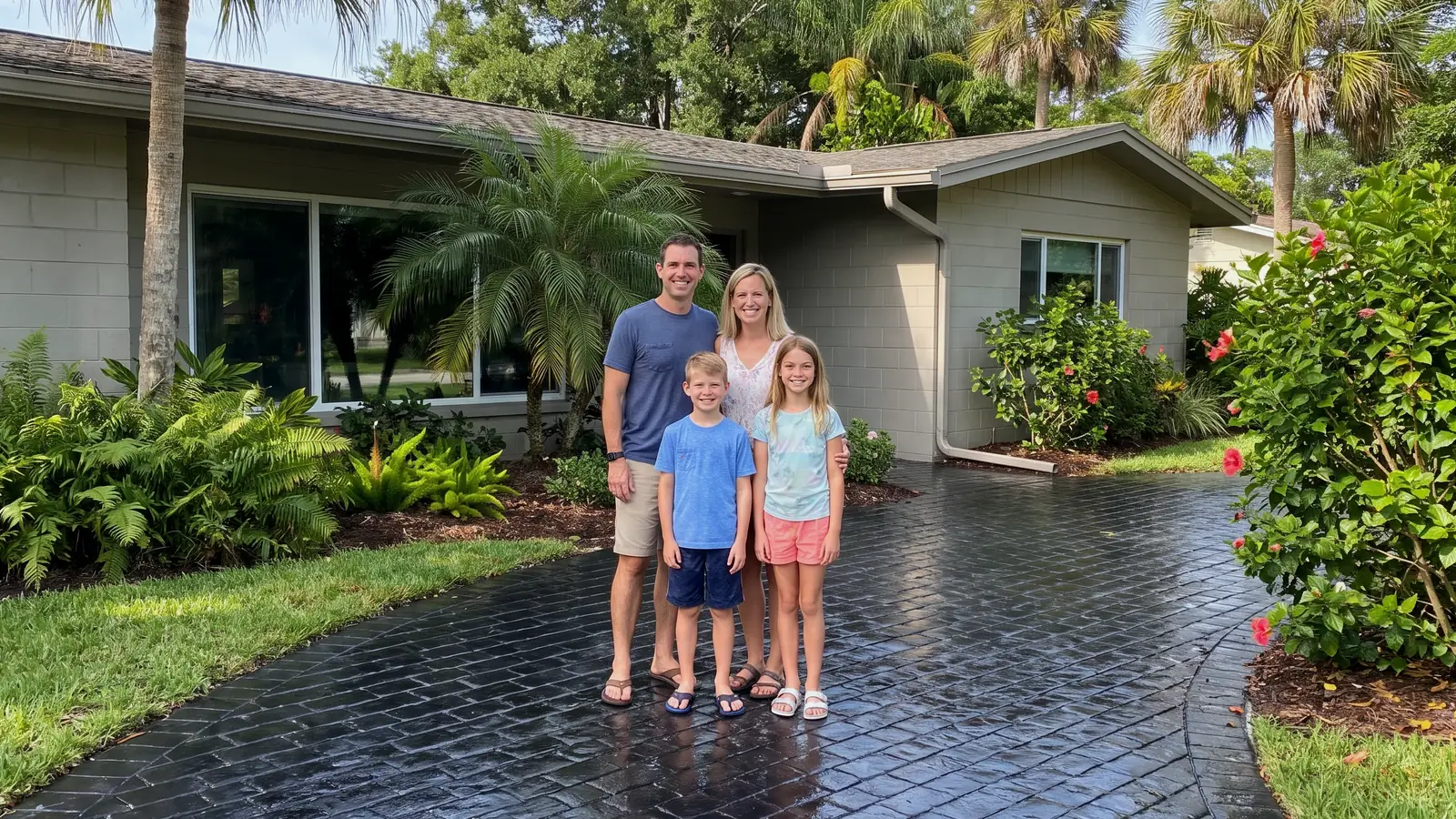
Paver sealing for Temple Terrace homes
Paver Sealing in Temple Terrace, FL
From 1920s villas to mid-century homes, Temple Terrace pavers can get a free sealing estimate when you call (656) 254-3570.
- Brings out deeper paver color
- Fresh joint sand helps lock pavers in place
- Gives weeds less room to grow
- Makes the surface easier to keep clean
- Free estimate, no obligation
Request a Free Estimate
Free, no obligation.
Fast, careful paver sealing in Temple Terrace
Paver sealing in Temple Terrace is available for homes of every age, from the 1920s villas near the old golf course to mid-century streets off the river. A local contractor will wash, re-sand and seal your driveway, walk or pool deck, and the free estimate carries no obligation. Send your details when you get a free estimate, and an answer comes within 1 business day, usually much sooner.
Picture the walk to your front door after a wet summer. Brown leaf stains sit under the oaks, the joints have gone green, and the color that once matched the house looks tired. A wash, fresh sand and a new coat can bring the walk back to one clean tone, and the whole front yard looks sharper. If you would rather talk it over first, call (656) 254-3570 and describe your pavers.
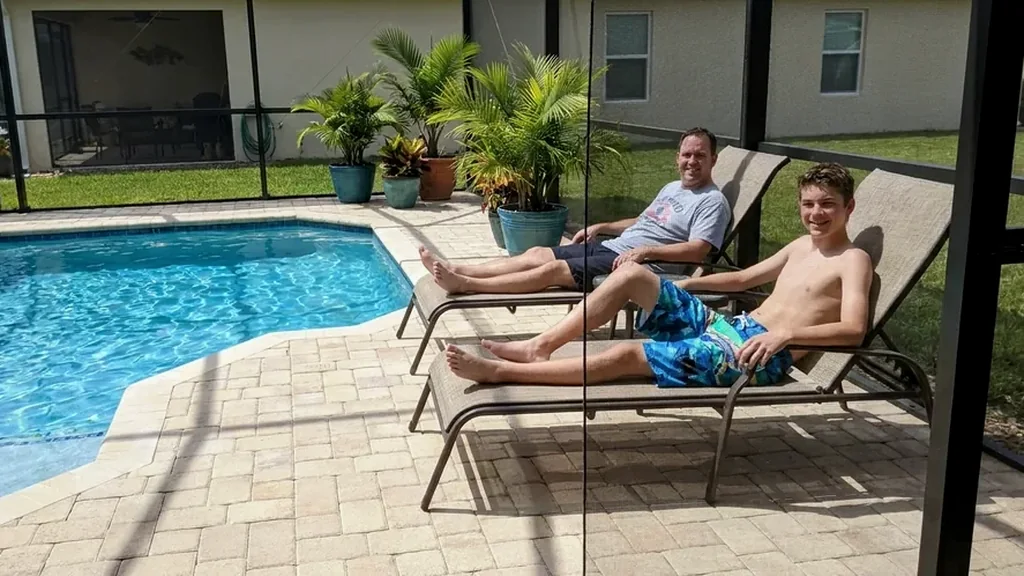
Why hire a local paver sealing contractor in Temple Terrace?
Temple Terrace homeowners hire a local paver contractor because the city mixes 1920s villas, mid-century homes and river-damp lots under old oaks. To hear how that applies to your street, get a free estimate.
Free look, no obligation
A contractor reviews your Temple Terrace pavers and gives you a price first. You can say no and owe nothing.
A range to check against
Around Tampa Bay the published price for washing, sanding and sealing is $1.25 to $2.50 per square foot. Use it to judge any quote.
A finish for older homes
Matte keeps pavers quiet beside a 1920s villa. A wet look deepens color but shows scuffs sooner, so choose with care.
Care near older walls
Rinse water and cleaners are kept off older masonry and plantings where pavers meet the house. You can ask how that is handled.
Get Your Free Estimate in Temple Terrace
Tell us about your pavers in Temple Terrace.
Free, no obligation
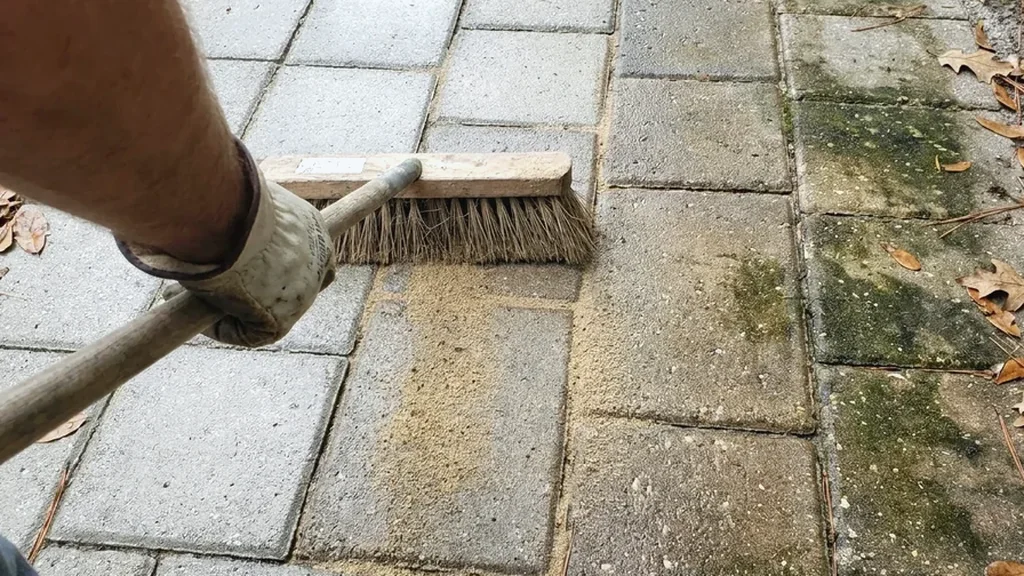
What paver problems show up most in Temple Terrace?
Leaf stains under the live oaks
Temple Terrace is known for its sand live oaks and is a Tree City USA. Oak leaves that sit on damp pavers leave brown blotches that dull the color. The marks show most on light driveways and front walks. Washing lifts them, and a sealed surface lets the next batch of leaves rinse off more easily. If your walk sits under a big oak, the stains tend to return each fall, so a recoat is worth planning around that season. A sealed walk will not stop the leaves from falling, but it makes each cleanup easier.
Green growth near the river
The Hillsborough River runs through the eastern and southern parts of the city, and the air stays damp. Moss and algae only grow on pavers where shade is heavy and the surface stays wet. Lots under old oaks near the water meet both conditions. A wash clears the film, and sealing helps the surface dry faster after rain. Pool cages and screened lanais near the water can stay damp longer than an open driveway, so they green up first. Pavers close to the Riverhills and Woodmont areas sit under the same kind of tree cover, so they behave alike. A local paver company notes that the river wraps the city on three sides, so that damp air reaches most neighborhoods.
Joint sand that washes out
Hillsborough County sits on sandy ground, and the most common soil holds almost no water. Rain from late May to early October pushes water through open joints and takes the sand with it. Wider joints collect soil, and weeds soon follow. New sand goes back in after each wash, before any coat. Pavers shift when the sand beneath their edges thins, which is why the joints are topped off to the edge of each stone. Heavy storms in the peak weeks from July to early September do the most damage to thin joints. Joint sand also keeps pavers from shifting against each other as the ground softens in the wet season.
Rust where irrigation hits pavers
Most Florida well water is high in iron, per UF/IFAS, and watering with it can leave orange streaks. A local paver company also mentions iron staining on well-water homes here. Light pavers beside lawn beds show the fans first. Rust is cleaned off during the wash, because a coat would trap it. If you water from a well, mention it, and the contractor will plan extra time for the wash. Pale pavers beside a lawn bed show the fans first, and orange stains set harder the longer they sit.
An unknown coat from an earlier owner
Homes here run from the 1920s to later decades, so pavers may be new or may have been redone more than once. An earlier owner might have used any of several products. Water-based sealer cannot go over solvent-based, so the old coat decides what goes on next. Peeling, patchy or shiny spots hint that something is already there. A short test on a hidden corner often tells the contractor what the old product is. Telling the contractor about any repairs you remember saves guesswork. If the pavers sit beside a 1920s home, ask whether any earlier work was done by a past owner.
Do older Temple Terrace homes need different paver care?
Yes, because the city's oldest homes follow a Mediterranean Revival plan from the 1920s, and a contractor should ask about the house before choosing how to rinse. Tampa architect Leo Elliott designed the first houses in 1921, and fifteen of his buildings remain. Dwight James Baum added more than 35 residences in 1926. Share your home's age as you get a free estimate.
Temple Terrace also has a collection of mid-century modern homes, built after World War II, including at least two by architect Frank Albert DePasquale. A local paver company names Golfview, Riverhills and Raintree Village among the areas it works in. Streets near Bullard Parkway have their own patterns of shade and drainage. Tell the contractor which part of the city you live in when you call (656) 254-3570.
In 1925 and 1926 the Temple Terrace Golf and Country Club hosted the Florida Open, on a course that has hardly changed. The city is known for its sand live oaks, so expect shade on many lots near the course. Shade means damp pavers, which means green film and leaf stains. Ask for a quote that covers every paver surface, and get a free estimate to start.
Big trees matter for pavers. The grounds of the Woodmont Clubhouse hold large live oaks and longleaf pines that were never logged, and sand live oaks shade many streets across the city. Shade slows drying and feeds leaf stains. Tell the contractor how much of your driveway sits under branches when you get a free estimate.
What does paver sealing cost in Temple Terrace?
A full wash, sand and seal around Tampa Bay is commonly priced at $1.25 to $2.50 per square foot. In Temple Terrace, oak stains, river damp and an old coat of unknown type move a job within that range. Courtyards behind older homes can take longer because gear gets carried in by hand. Since the estimate is free, get a free estimate and see where your oak-shaded lot lands.
A walk by itself carries the same travel and setup as a big job, so it costs more per foot. Pricing the walk, driveway and patio in one visit spreads that cost. Before you call (656) 254-3570, list each area. Then decide which ones go first.
| Paved area | Typical example | Clean, sand and seal |
|---|---|---|
| 300 sq ft | Small patio or walkway | $375 to $750 |
| 600 sq ft | Two car driveway | $750 to $1,500 |
| 1,000 sq ft | Large driveway or pool deck | $1,250 to $2,500 |
| 1,500 sq ft | Driveway plus pool deck | $1,875 to $3,750 |
Math based on the $1.25 to $2.50 per square foot that Tampa Bay paver companies publish. Your contractor sets the actual price after seeing the surface. Repairs, leveling and stripping failed sealer are usually extra.
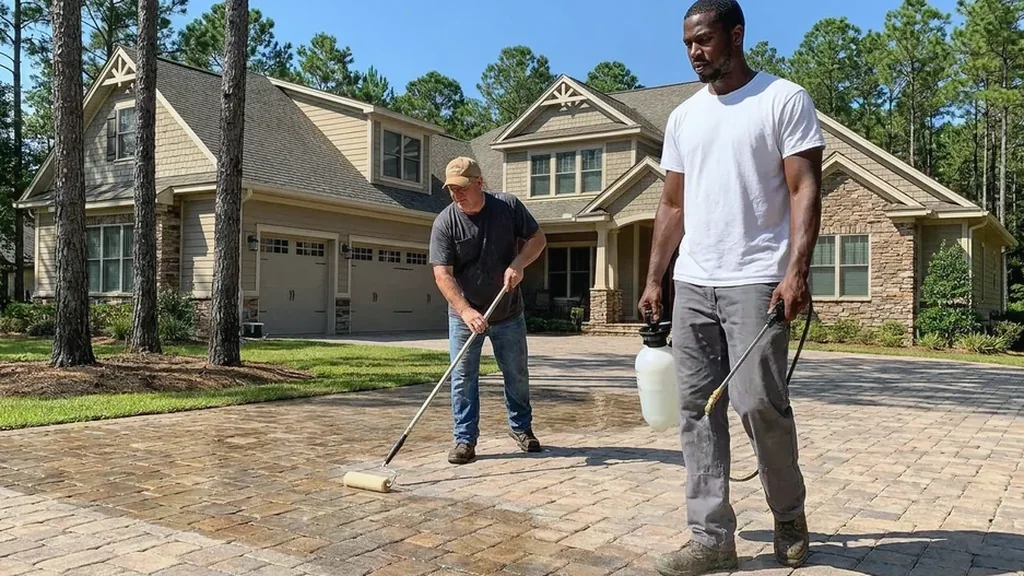
How does a paver sealing job work in Temple Terrace?
Size up the surface
A contractor walks the lot and looks at how water leaves it. Low, raised or loose pavers are marked, since a coat keeps any dip as it is. Any older sealer gets identified first, because water-based cannot go over solvent-based. Pictures of problem spots help, and so does the age of the house. It helps to know whether the paver area was added with the house or years later.
Lift leaf stains and green film
Brown oak blotches, algae and orange irrigation marks come off in the wash. Older masonry, trim and plants beside the pavers are rinsed with care. Stains must go before the coat, because sealer would keep them. Pool decks and lanais get the same care, with attention to screens and drains. Cleaner choices are kept gentle beside older walls and plant beds.
Rebuild the joints
New sand is worked into every seam until the joints sit even with the stones, then the surface is swept. Sandy county soil and summer rain empty joints quickly, so this step matters as much as the wash. A last pass with a broom leaves no loose grains sitting on top of the stones.
Choose the weather window
Damp stone cannot be sealed. Shaded oak lots and walks near the river dry slowest, so the work may start late or wait a day. Clear mornings in spring and fall tend to be the easiest. Mornings are best, because the sun has time to dry shaded corners first. A morning start gives the sun time to dry shaded corners under the oaks.
Lay the coat
Sealer goes down in the finish you picked, sprayed and rolled where it looks heavy, and edges beside beds are finished by hand. Two light passes beat one thick one. The contractor will say when the surface can take feet and cars. Light passes also leave the surface looking even instead of streaky. A few days later, check the edges beside planting beds for any thin spots.
Complete paver services in Temple Terrace
A Temple Terrace job has four stages: wash, sand, dry, seal. The wash takes off oak stains and river film. New sand goes into the joints next, and the sealer goes on last so nothing dirty is trapped under it. Call (656) 254-3570 to ask how long each stage takes on your lot.
Surfaces here vary. Front walks under oaks pick up leaf stains and green film first, driveways collect tire marks, and courtyards beside older walls call for gentle rinsing. Pool decks take sun and splash. When you get a free estimate, list each surface.
A past owner's sealer decides part of the choice, since water-based cannot go over solvent-based. After that it is taste. Matte stays quiet beside a 1920s villa, while a wet look gives deeper color and shows marks sooner. Call (656) 254-3570 to talk through the look for your home.
Rain is the scheduler. The season runs late May to early October, and the National Weather Service lists heavy rain and river flooding among the hazards from July to early September. Shaded oak lots dry slowest. For a date that suits your street, get a free estimate.
Questions to ask before you hire
- What is your rain plan: who reschedules, and does the quote change?
- Is the price per square foot, and will the quote show how many square feet you measured?
- If my pool deck gets slick when wet, can the finish include a slip-resistant additive?
- Will the finish meet my HOA's color rules in a deed-restricted neighborhood?
- What do you do about weeds and moss that grow up between the joints?
- Do you put on one coat or two, and does the second go on while the first is still tacky or after it dries?
- Can the black mold on my shaded pavers come out before sealing, or will it show through the coat?
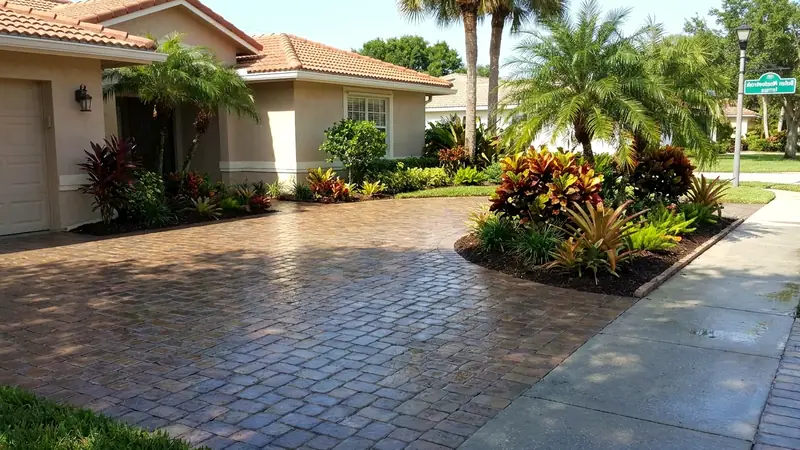
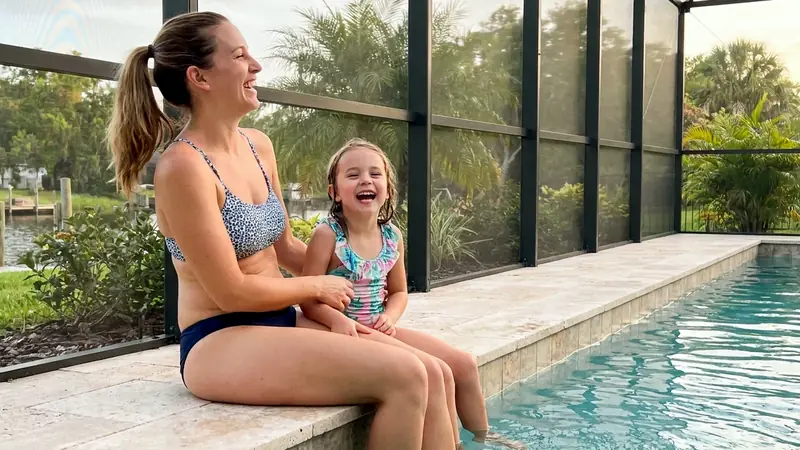
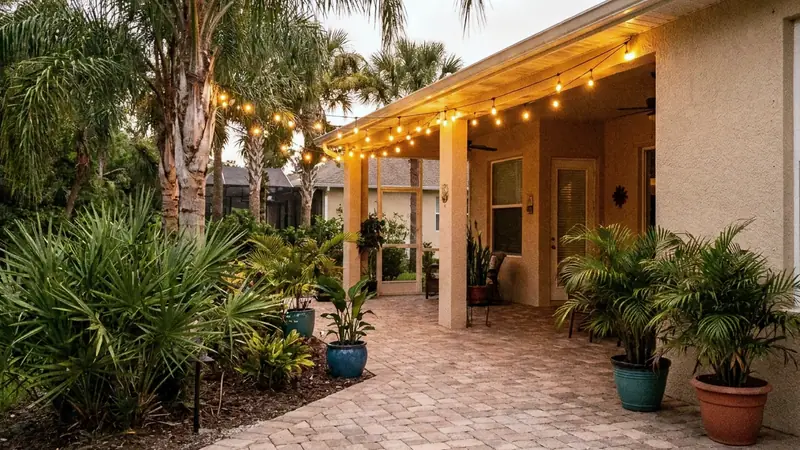
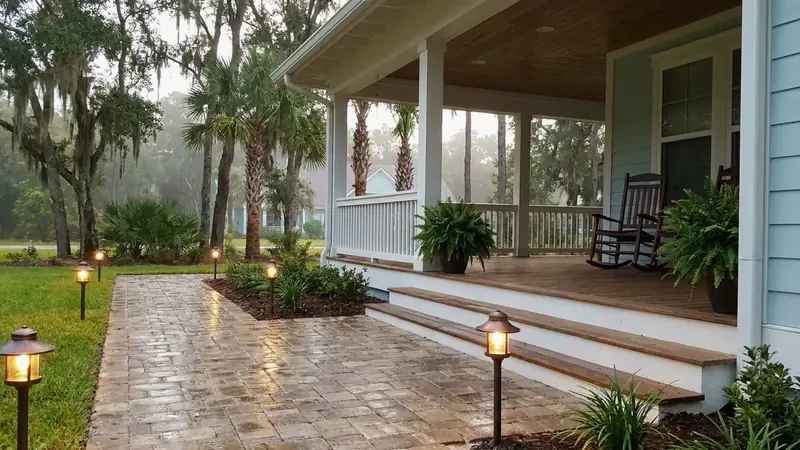
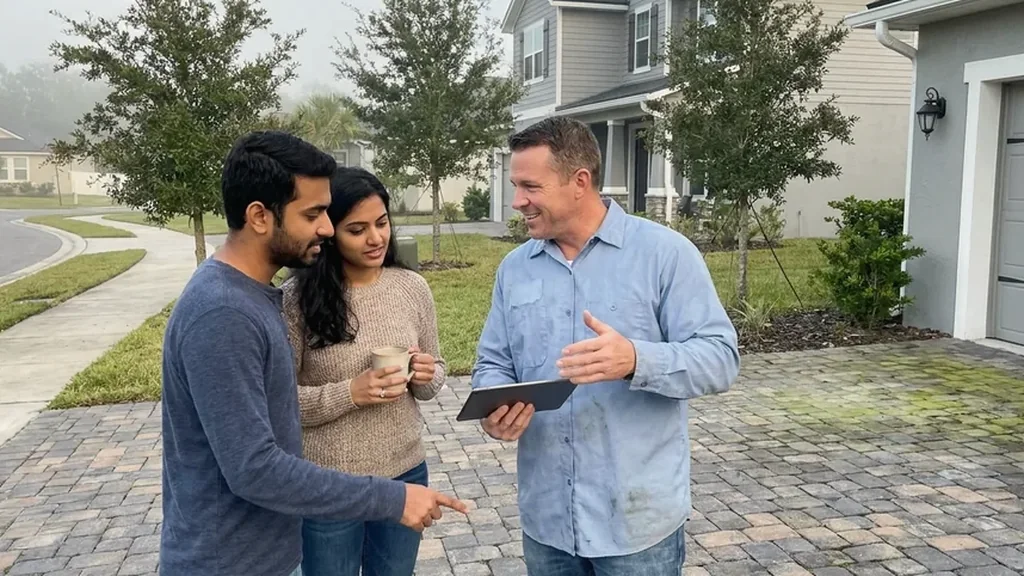
What do sealed pavers look like around Temple Terrace?
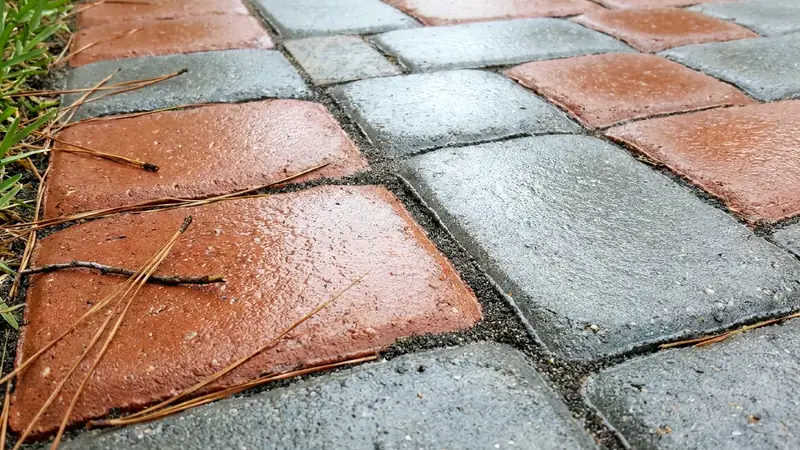
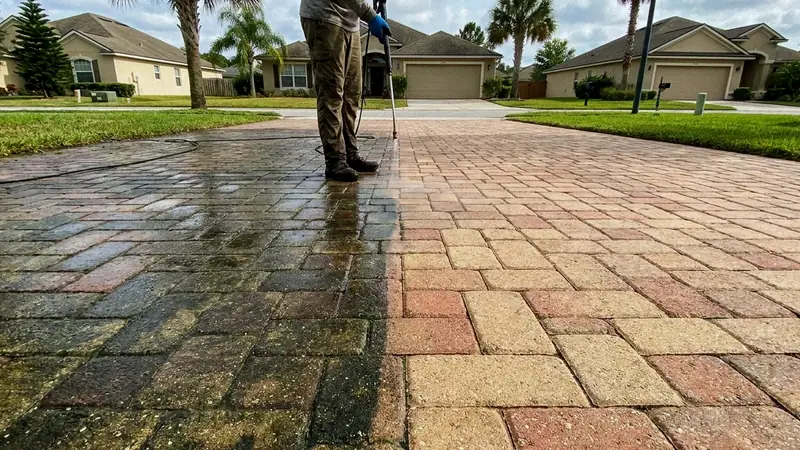
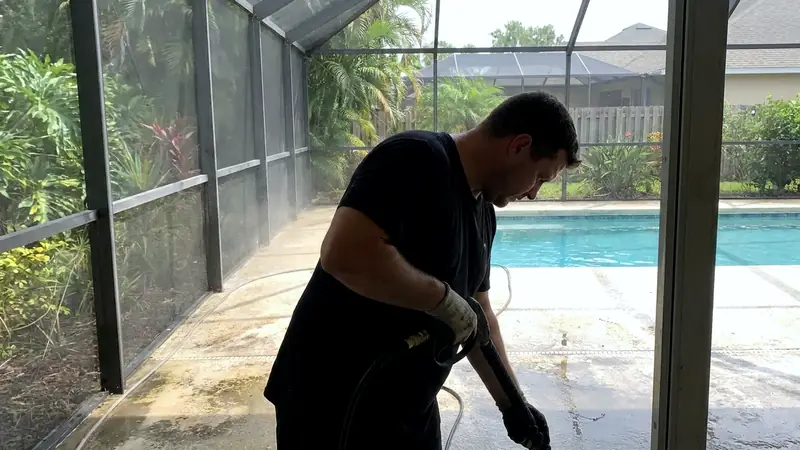
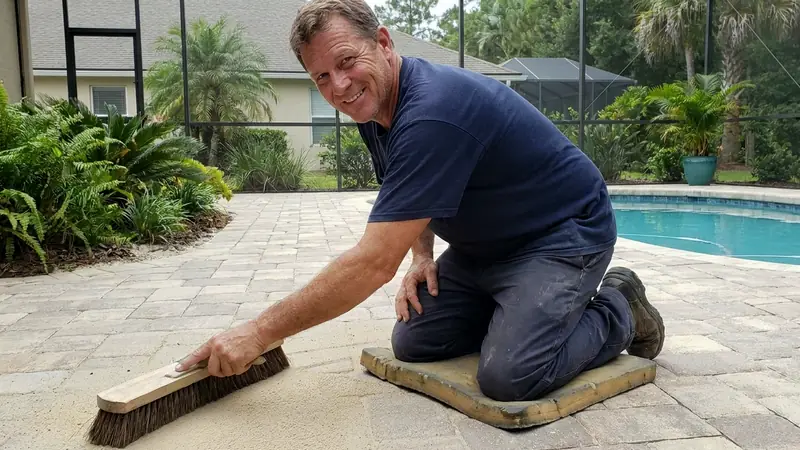
Why local matters in Temple Terrace
Temple Terrace is not a new subdivision, and a contractor who works here knows it. Oaks, river damp and houses from several eras all change how pavers should be cleaned. Someone from outside the area may treat every lot alike. To reach a contractor who works northeast Hillsborough County, call (656) 254-3570.
Storms build most afternoons from late May on, and lots by the river stay damp after the sun returns. A local pro leaves room in the schedule for that. Ask how a visit would fit your street when you get a free estimate.
Homes here span the 1920s, the mid-century years and later, so the pavers may be recent, repaired or original. Each calls for a slightly different plan. Name the decade your home was built when you get a free estimate, with no obligation.
What is the history behind Temple Terrace?
Temple Terrace was planned in the 1920s as a Mediterranean Revival golf course community and named for the Temple orange. Bertha Palmer's Riverhills Ranch came first, and the Woodmont Clubhouse, built in 1914 as a stable, is the city's oldest building. By 1922 the groves covered 5,000 acres, and about 500 acres along the river were set aside for a clubhouse, golf and houses. If your driveway is near Woodmont Avenue, get a free estimate.
Riverhills Park and Scout Park cover 41 acres along the Hillsborough River, with a boardwalk, a 2-mile trail and a replica of the cross Spanish explorers raised in 1757. Florida College uses the old country club clubhouse as Sutton Hall, and Billy Graham Memorial Park sits beside the 18th green. The Hillsborough River wraps much of the city. If your home is by one of these spots, call (656) 254-3570 and share your street.
Florida College, founded in 1946, fills some of the city's oldest buildings. Billy Graham, who attended Florida Bible Institute on the same grounds, wrote that he received his calling on the 18th green of the golf club. Temple Terrace is also the smallest of Hillsborough County's three incorporated cities. If you live near campus or the golf course, call (656) 254-3570 and name your street.
Frequently Asked Questions
How much does it cost to seal pavers in Temple Terrace?
Published Tampa Bay pricing for a clean, sand and seal is $1.25 to $2.50 per square foot. Oak stains, river damp and an old coat move a Temple Terrace job within that range. Ask that the quote lists each paver surface and its size. Courtyards behind older homes may cost more because the gear is carried in by hand. A free estimate gives you a number for your own street.
How often should Temple Terrace pavers get a new sealer coat?
Plan around a quoted life of two to five years for each coat. Shaded oak lots and sunny pool decks wear differently, so check yours at the shorter end of that span. A contractor can look at each surface and tell you where it stands. Leaf-stained walks under the oaks tend to need attention sooner than open driveways.
Is it better to spray or roll paver sealer?
The usual approach among pros is a spray pass followed by a roller where the coat looks heavy. Spraying is faster and more even on big areas, and rolling helps on edges and small spots. Rolling too hard can pull sand from the joints. Rolling is gentler near edges and tight corners.
Which sealer should I choose for pavers in Temple Terrace?
Your pick comes down to the finish you like and whatever coat is already down. Matte suits older homes and a wet look adds shine but shows scuffs sooner. If solvent-based sealer is already down, a water-based one cannot go on top of it. Ask for a small sample spot so you can judge the color in your own light.
Should I hire a contractor to seal pavers in Temple Terrace?
Hiring a contractor makes sense when you want everything done in the right order, and the estimate is free. Equipment and a dry weather window matter too. Finish and date remain yours to decide. Ask who will handle any association questions if your street has them.
What are the cons of sealing pavers in Temple Terrace?
The main costs are renewal and weather, since sealer wears and is redone every few years. A wet look shows marks earlier than matte. A rainy week can push the day back. Doing the work in dry months helps avoid delays. A fresh coat needs a while to cure, so traffic waits.
Do older Temple Terrace homes need special care?
They can. Rinse water and cleaners should be kept off older masonry, trim and plantings where pavers meet the house. Mention your home's age at the estimate so the contractor plans for it. Plants near the walls get a rinse as well, so nothing is left coated in cleaner.
Can leaf stains from oaks be removed from pavers?
Usually yes, during the wash that comes before sealing. Stains are treated first because sealer would trap them. A sealed surface also lets later leaves rinse off more easily. Brown oak blotches fade after the wash, though deep stains can take a second pass. Oak leaves that sit on damp pavers stain faster, so a quick sweep after a storm helps.
Does sealing pavers help with weeds and green film in Temple Terrace?
It reduces the problem without ending it. Weeds root in open joints, and algae spreads where shade and damp meet. Fresh sand and a sealed surface give both less to hold onto.
Ready for a Free Estimate in Temple Terrace?
Call (656) 254-3570 and tell us about your pavers.
Free, no obligation